Commercial infiltration chokes residential neighborhoods
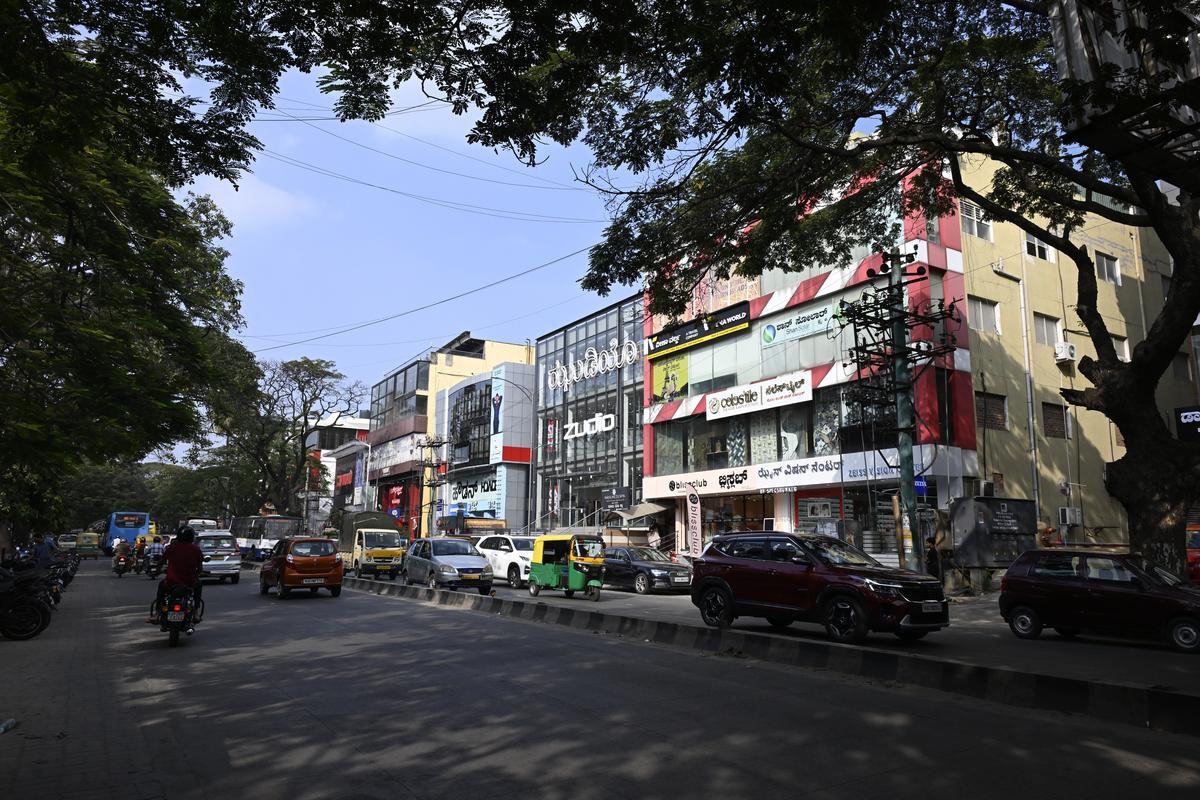
BENGALURU Across Bengaluru’s rapidly expanding urban landscape, historic and quiet residential enclaves are facing an escalating crisis. Unchecked commercialization has steadily breached the boundaries of areas strictly demarcated for residential use under municipal planning frameworks, transforming peaceful neighborhoods into congested commercial hubs and leaving local residents grappling with severe environmental, logistical, and safety hazards. A prime illustration of this systemic encroachment is Wellington Street, situated in the heart of Richmond Town. Under the city’s Revised Master Plan 2015 (RMP 2015), the thoroughfare is officially notified as a purely residential zone. However, the ground reality starkly contradicts municipal zoning laws. What began decades ago with a small neighborhood bakery and a modest beauty parlor has metastasized into a dense cluster of commercial operations, including full-scale restaurants, supermarkets, and specialty retail stores. The physical architecture of Bengaluru’s older residential areas was never designed to absorb commercial foot traffic or high-density vehicular parking. Measuring a mere 15 to 18 feet in width, narrow roads like Wellington Street are routinely choked by delivery vans, patron automobiles, and overflow parking from commercial establishments. Residents report that getting vehicles in and out of their own drivehouses has become a daily battle. Portions of the narrow asphalt are commandeered for parking, creating severe bottlenecks that pose a direct threat during medical emergencies when ambulances or fire tenders struggle to navigate the obstructed lanes. For long-term residents, the shift extends far beyond mere traffic inconvenience, touching upon fundamental questions of public health, personal security, and civic governance. Tobby Simon, a resident of Wellington Street who has waged a persistent administrative battle across multiple levels of government, highlights the profound toll exacted by unchecked commercial creep. "There is a security risk. There are hygiene issues. And on top of that, the restaurant is allowed to remain open until 2 am. What kind of a regulatory system do we have? We have complained repeatedly, but nothing changes," Simon notes, capturing the widespread frustration of urban homeowners facing institutional inertia. Late-night noise pollution, improper waste disposal from commercial kitchens, rodent infestations, and an unceasing influx of unfamiliar visitors at all hours have severely eroded the quality of domestic life. Residents argue that municipal authorities and town planning bodies are turning a blind eye to blatant zoning violations, allowing commercial interests to override residential rights. The situation on Wellington Street is symptomatic of a citywide phenomenon affecting areas from Koramangala and Indiranagar to Jayanagar and Richmond Town. As commercial rentals soar along main commercial corridors, businesses increasingly target inner residential lanes to bypass costs and capture foot traffic, exploiting loopholes in enforcement. Urban planners and civic activists warn that unless the Bruhat Bengaluru Mahanagara Palike (BBMP) and town planning authorities strictly enforce master plan zoning laws, penalize illegal commercial conversions, and protect residential sanctity, Bengaluru's historic neighborhoods risk losing their livability entirely, suffocating under the weight of unregulated commercial expansion.