Great saint and social reformer Kanakadasa remembered in Mysuru
Education, employment and economic empowerment are essential to eradicate the caste system, says Minister Yathindra
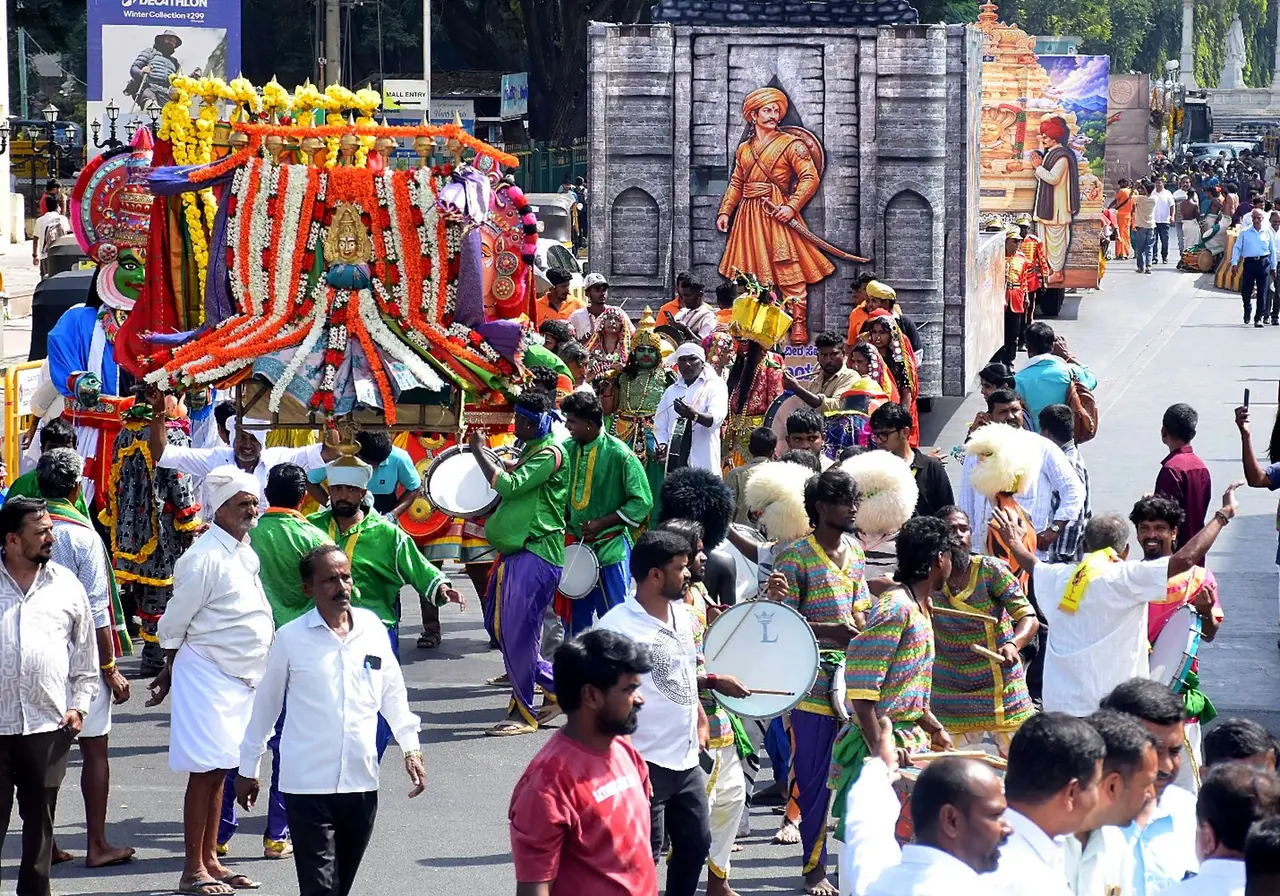
MYSURU: Saint Kanakadasa was a great social reformer who fought against social inequality and the caste system through his literary works and devotional compositions, said Urban Development Minister and Mysuru District In-charge Minister Dr. Yathindra Siddaramaiah.
Speaking after inaugurating the 539th birth anniversary celebrations of saint-poet Kanakadasa at Kalamandira here on Friday, he said although Kanakadasa lived during the 15th and 16th centuries, his teachings remain relevant even today. He did not confine himself to devotional songs but also used his literary works, particularly ‘Kula Kula Kula Endu Hodedadadiri’ (Do not fight in the name of caste), to promote social equality. Education, employment and economic empowerment are essential to eradicate the caste system permanently.
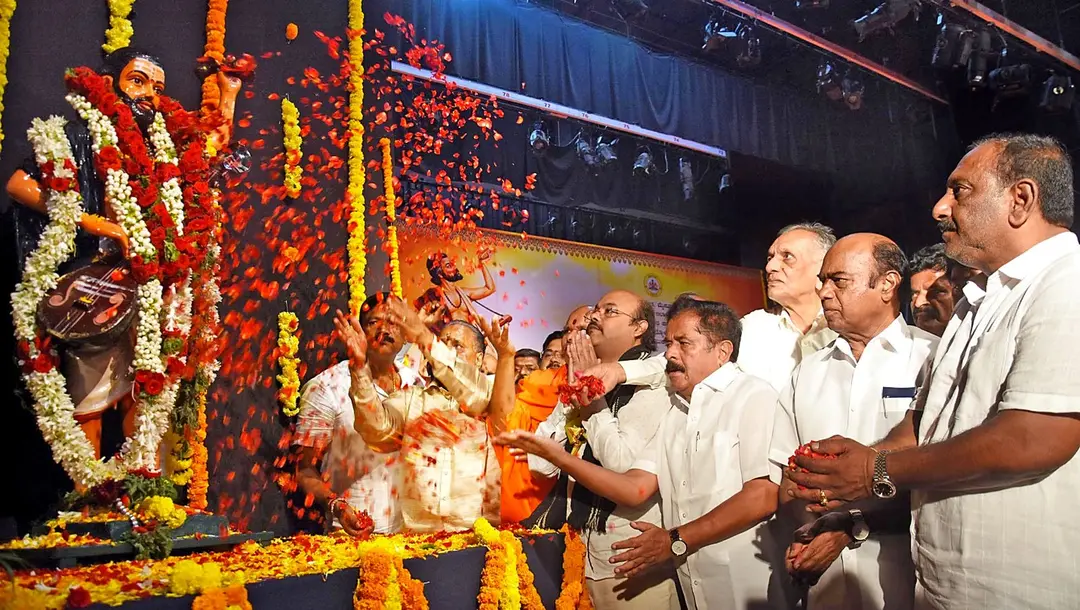
Urban Development Minister and Mysuru District In-charge Minister Dr Yathindra Siddaramaiah offering floral tributes to the statue of Saint Kanakadasa at a function held in Mysuru on Friday.
The minister said the government was working towards empowering the poor and weaker sections at the grassroots level. During the previous government led by Siddaramaiah, priority was given to translating the complete literary works of Kanakadasa, establishing the Sangolli Rayanna Development Authority and developing memorials. He said merely listening to Kanakadasa’s teachings was not enough and that society could progress only by putting his ideals into practice.
Kanakadasa Jayanthotsava Samithi president and former MLA M.K. Somashekar said Kanakadasa had used devotional compositions, literary works and poetry to expose social evils, inequality and superstitious practices, striving to build an egalitarian society.
His famous words, ‘Kula Kula Endu Hodedadadiri, Nimma Kulada Neleneyadaru Ballira?’ (Do not fight over caste; do you even know the origins of your own caste?), conveyed the message that all human beings are equal, he said.
After his father’s death, Kanakadasa assumed the title of Dandanayaka (military commander) and took responsibility for protecting and administering several villages. He earned the confidence of the Vijayanagara rulers. During his stay in Vijayanagara, Kanakadasa came into contact with Sri Vyasaraja, who recognised and appreciated his extraordinary talent. Witnessing death and destruction during wars, suffering personal and family losses, and being inspired by his spiritual experiences, Kanakadasa renounced his position as Dandanayaka and worldly possessions. He subsequently embraced the Haridasa tradition and composed devotional works under the pen name ‘Adikeshava’ of Kaginele.
Among the nearly 350 Haridasas, Kanakadasa was a unique personality who, despite belonging to a Dalit/Shudra background, rose to great spiritual heights through his devotion and literary contributions, Ningappa said.
Explaining the significance of Kanakadasa’s literary works, including Mohana Tarangini and Ramadhanya Charitre, he said the latter conveyed a powerful message of social equality through a dialogue between food grains associated with the upper and lower sections of society. Kanakadasa had conveyed that truth, devotion and humanity, rather than caste, constituted a person’s true identity. His message was particularly relevant to a society still divided by caste-based differences, he added.
Sri Kaginele Kanaka Gurupeetha pontiff Sri Sri Dr. Shivanandapuri Swamiji and others were present.