Implement new textile policy effectively at district level: Rohini Sindhuri
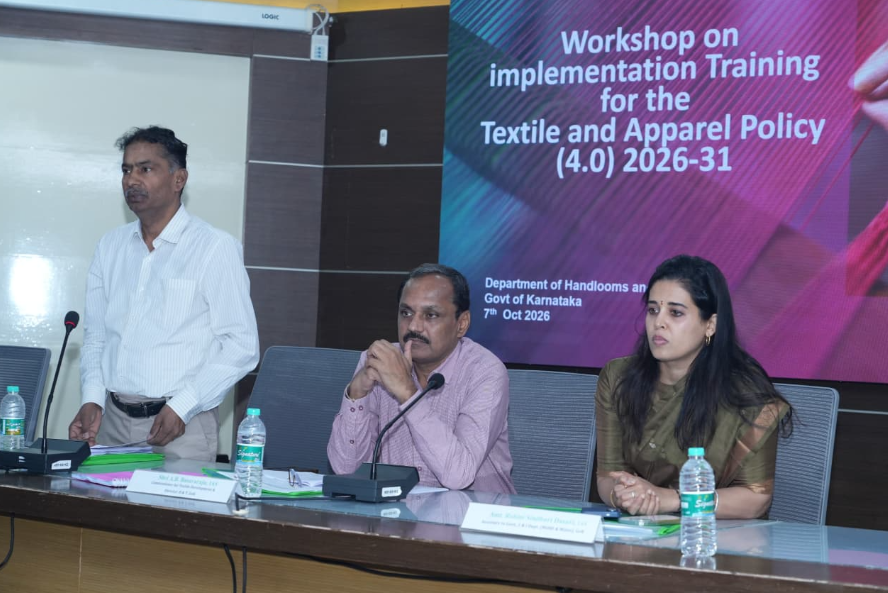
CH NEWS BENGALURU District-level officials must ensure effective implementation of Karnataka’s new Textile & Apparel Policy and translate its benefits into tangible outcomes for the industry, weavers and beneficiaries, said Rohini Sindhuri, IAS, Secretary, Department of Commerce and Industries. She was speaking after inaugurating a training workshop on implementation of the Textile & Apparel Policy for officials of the Department of Handlooms and Textiles at the KASSIA auditorium on Wednesday. Sindhuri said Karnataka had significant potential for further growth in the textile sector and the success of the new policy would depend on its effective implementation at the grassroots level. “The new policy has been framed with the initiative of Chief Minister D.K. Shivakumar and Sugar and Textiles Minister Rudrappa Lamani. District officials must understand the policy in detail, identify local opportunities and work proactively to facilitate new investment and employment generation,” she said. She directed officials to prepare taluk-specific action plans for Focused Taluks, taking into account local handloom traditions, textile strengths, available skills, production capabilities and market potential. Officials were also asked to identify traditional products, local skill clusters, enterprise opportunities and market linkages in their respective regions and connect them with opportunities for investment, new businesses and employment. Textile Development Commissioner A.B. Basavaraju said the policy included several new schemes and incentives aimed at strengthening the handloom sector, supporting weavers and expanding textile industry activity. He said continuous outreach, guidance and follow-up at the district level would be critical for effective implementation. Additional Directors C.S. Yogesh and Sridhar Nayak, Managing Director Soumya M. and senior departmental and district-level officials participated in the workshop. “Creating awareness about the incentives and ensuring that eligible beneficiaries and entrepreneurs are able to access them must be a key responsibility of district officials.” A.B. Basavaraju, Textile Development Commissioner
Textile Policy Implementation • Focus: District-level implementation • Action: Taluk-specific plans • Priority: Weavers and entrepreneurs • Key areas: Skills, products, markets • Outcome: Investment and employment
Policy implementation focus The workshop focused on translating the Textile & Apparel Policy into district-level action. Officials were asked to map local textile strengths, traditional products, skill clusters and market opportunities. The department stressed the need for awareness campaigns, guidance and follow-up so eligible entrepreneurs and weavers can access incentives. Taluk-specific planning is expected to help align policy support with local production capabilities and opportunities for investment and employment.